

12 Jul 50 Years to Operation Entebbe: The Moments That Changed Israeli History
50 Years to Operation Entebbe: The Full Story Behind the Rare Photo Collection That Changed History
The year is 2026, and the State of Israel marks exactly a jubilee – 50 years – since one of the most defining, suspenseful, and glorious events in its history. In the summer of 1976, nearly 3,800 kilometers away from the country’s borders, the IDF accomplished the impossible, proving to the entire world that Israel will never abandon its citizens, wherever they may be. To commemorate this historic milestone, we are proud to present an exclusive collection of original vintage photographs that places you right inside the operations room, the fascinating intelligence-gathering process, and the burning tarmac in Uganda. To truly understand the power behind these images, this is the full story of the operation.
The Hijacking: Seven Days of Terror in the Heart of Africa
The drama unfolded on Sunday, June 27, 1976. An Air France passenger plane (Flight 139) took off from Tel Aviv bound for Paris. During a scheduled stopover in Athens, a cell of terrorists boarded the flight. Who were the hijackers? Four terrorists – two from the Popular Front for the Liberation of Palestine (PFLP) and two German nationals from the far-left terrorist organization Revolutionary Cells (including Wilfried Böse and Brigitte Kuhlmann).
The Destination: The hijackers forced the pilot to land in Libya for refueling, before continuing to Entebbe International Airport in Uganda, where they received the full support and safe haven of the Ugandan dictator, Idi Amin.
At Entebbe, the terrorists confined the 248 passengers and crew members inside the old terminal building. Two days later, the hijackers carried out a chilling selection process: they released the hostages holding foreign citizenship and kept only the Jewish and Israeli passengers, along with the French flight crew, who heroically refused to abandon their passengers. The ultimatum was absolute: release dozens of convicted terrorists imprisoned in Israel and other countries, or the hostages would be executed.
Operation Entebbe: A Collection of Original Vintage Photographs from Israel’s Historic Moments
Behind the Scenes: The Dilemma and Intelligence Mosaics
Throughout most of the crisis, the Israeli government, led by Prime Minister Yitzhak Rabin, engaged in intense negotiations to free the hostages and was prepared to consider capitulating to the demands. Concurrently, far from the public eye, the IDF was meticulously drafting a military rescue plan that seemed like pure science fiction.
The intelligence gathering was a masterpiece of planning:
-
Israeli intelligence officers interrogated the released foreign hostages upon their arrival in Paris to pinpoint exactly where the Israelis were being held.
-
Because an Israeli construction company (“Solel Boneh”) had originally built the Entebbe airfield years prior, the IDF managed to secure the original architectural blueprints of the terminal structure.
-
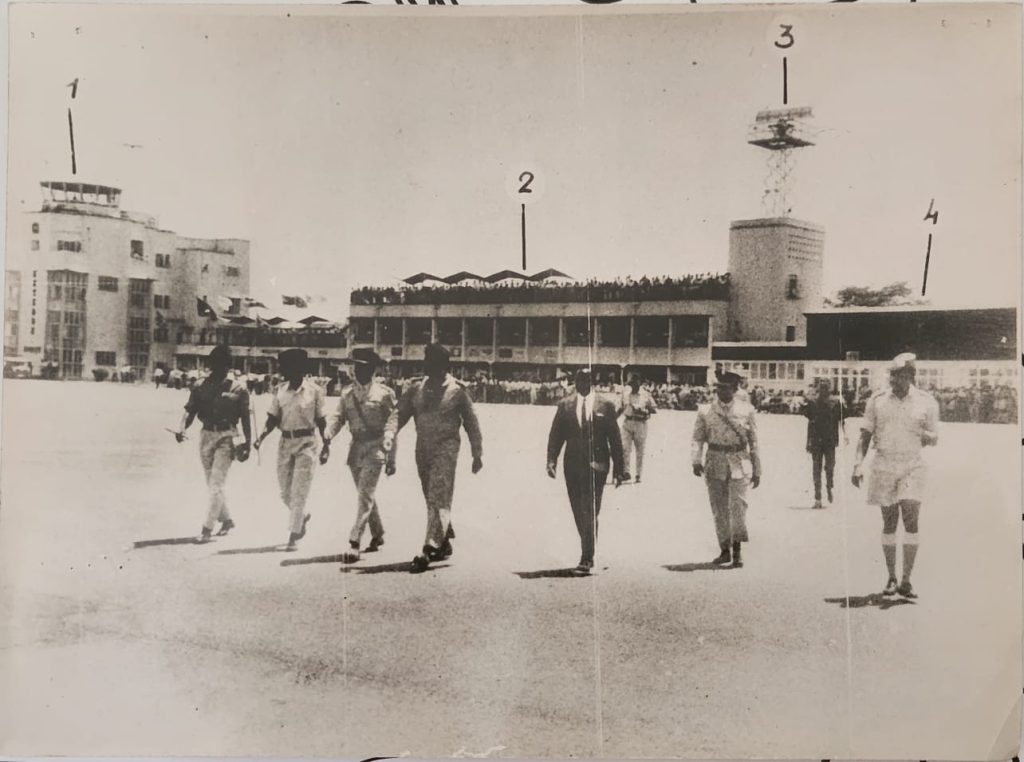
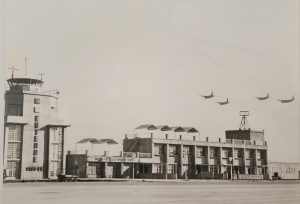
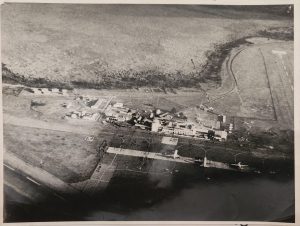
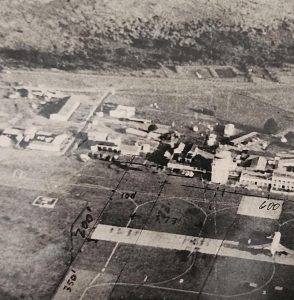
The aerial photographs in our collection perfectly capture this exact phase: classified aerial reconnaissance prints upon which precise tactical distances, runway metrics, and building coordinates were handwritten, enabling the pilots and elite operators to know exactly what they were stepping into.
The Raid: The Black Mercedes and Low-Altitude Breach
On Saturday, July 3, 1976, the green light was given. Four C-130 Hercules (“Karnaf”) transport aircraft took off from Sharm El-Sheikh, flying at extremely low altitudes over the Red Sea and East Africa to evade enemy radar.
Around midnight, the first plane touched down at Entebbe in near-total darkness. A convoy of vehicles emerged from the aircraft, spearheaded by a black Mercedes passenger car accompanied by Land Rovers—perfectly staged to mimic the official motorcade of Idi Amin and his entourage to deceive the Ugandan sentries.
Elite Sayeret Matkal commandos stormed the passenger hall. Within minutes of intense firefights, the seven terrorists were neutralized, and dozens of Ugandan soldiers were suppressed. To prevent pursuit, Ugandan Air Force fighter jets parked on the tarmac were destroyed. During the raid, 102 hostages were successfully rescued. Three hostages lost their lives in the crossfire, and another hostage (Dora Bloch) was later murdered in a local hospital as an act of vengeance by the Amin regime.
Yoni Netanyahu: The Commander Who Became a Legend
It is impossible to speak of Entebbe without honoring Yonatan (Yoni) Netanyahu, the commander of Sayeret Matkal who led the assault force—and the elder brother of the man who would later become Israel’s Prime Minister, Benjamin Netanyahu. Yoni, a revered commander, fearless warrior, and man of letters, was the beating heart of the operational planning.
Before departure, during his final briefing in Sharm El-Sheikh, as the operators grappled with natural tension and fear, Yoni delivered the pure essence of their mission:
“Even if someone is wounded or killed – you do not stop to treat him. First, you run to the hostage hall, neutralize the terrorists who could slaughter them, and disconnect any explosives if present.”
During the storming of the terminal, Yoni was fatally shot in the chest by gunfire coming from the control tower. Doctors fought for his life on the African tarmac, but he succumbed to his wounds. Yoni was the sole IDF casualty of the operation. Following his heroic fall, the operation’s official name was changed to “Operation Jonathan.”
The Rare Collection: Owning a Piece of History
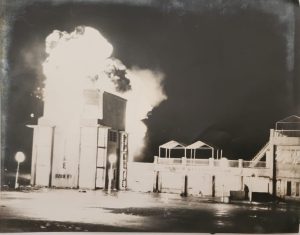
The photographs in this unique collection are not mere pictures—they are the living visual documents that captured the drama in real time. From the tactical reconnaissance print used for the raid’s blueprint, to the figure of Idi Amin pacing the runway, to the dramatic night photograph of the control tower engulfed in flames during the breach—each photograph is an authentic piece of vintage Israeli history.
The Sacred Value of Human Life
Operation Entebbe proved something far deeper than military supremacy and tactical brilliance. It showed that no other country in the world would be willing to risk everything, travel to the ends of the earth, and sacrifice its finest commanders and soldiers just to save its citizens from the hands of murderers. This profound ethos—that the life of an Israeli citizen is sacred, and that the State of Israel will turn over heaven and earth to bring them home—is what defines us as a people and as a nation.
50 years later, the historical value of these artifacts only continues to grow. This is a one-of-a-kind opportunity to hold a piece of our national memory, our spirit of heroism, and our ultimate moral compass.
BUY NOW
Sorry, the comment form is closed at this time.