

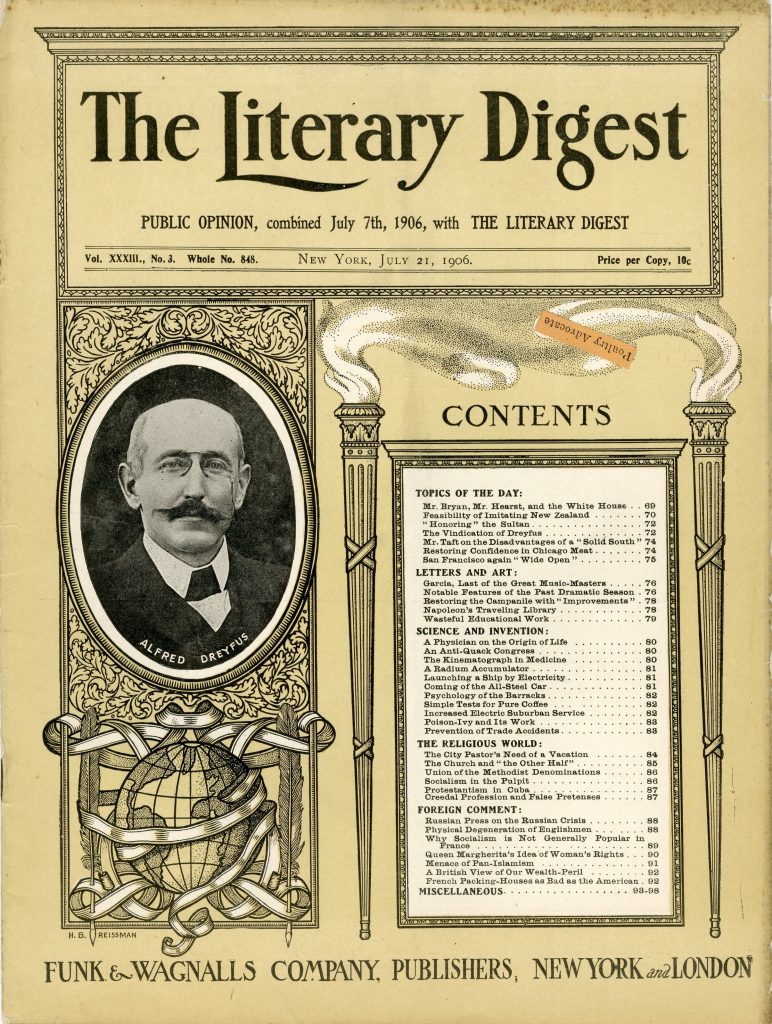
14 Dec The Final Acquittal of Alfred Dreyfus — An Extremely Rare Literary Digest Issue Documenting One of the Greatest Judicial Vindications in Modern History
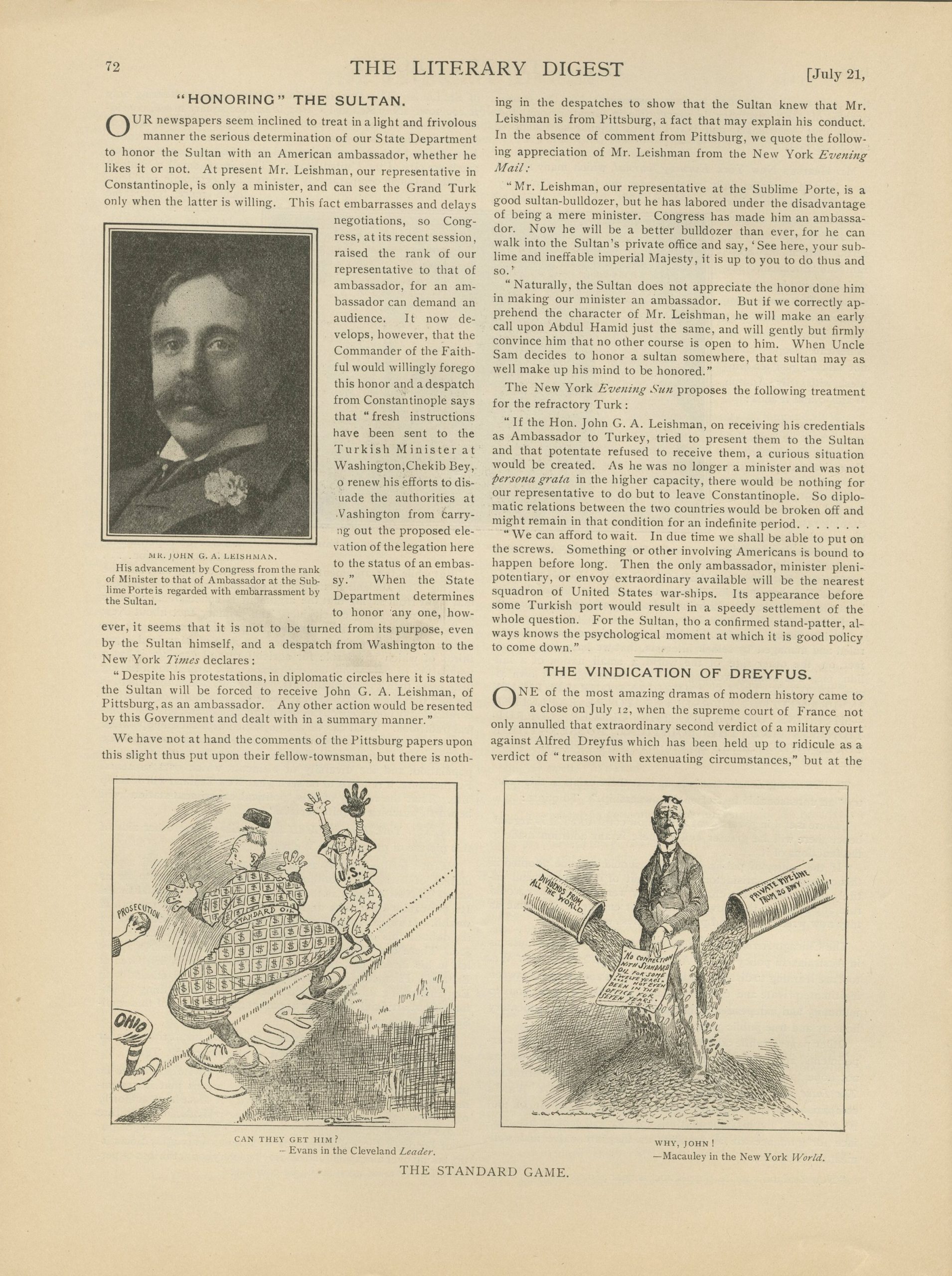
The Final Acquittal of Alfred Dreyfus
A Central Article in The Literary Digest, July 1906
The July 21, 1906 issue of The Literary Digest, published in New York, devoted its leading article to the final acquittal of Alfred Dreyfus, documenting one of the most profound judicial and moral dramas of modern European history. From its origins to its bitter conclusion, the magazine traced the Dreyfus Affair in full, while examining its grave implications—most notably the role of institutional antisemitism and the long shadow it cast over French society.
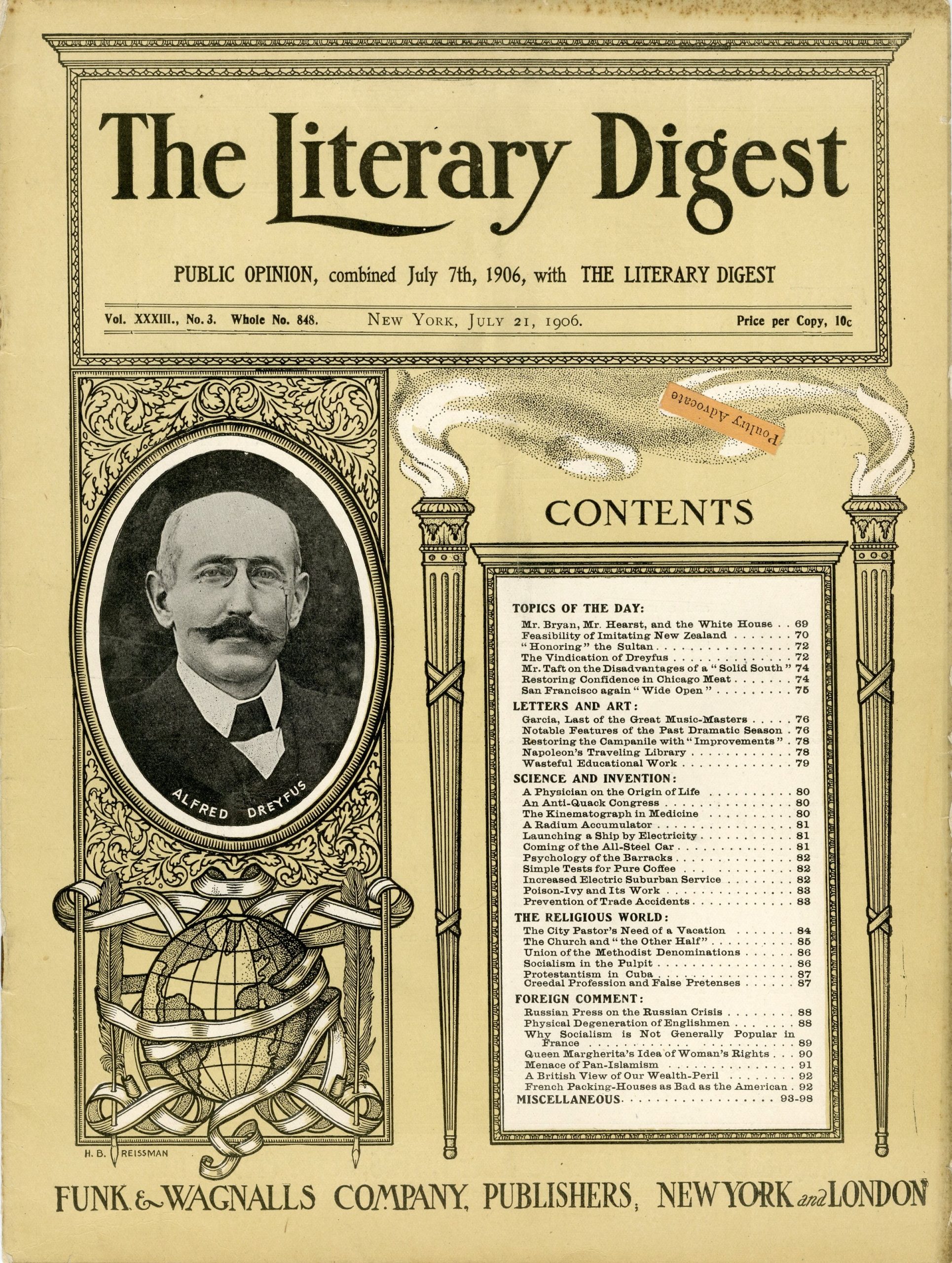
On July 12, 1906, after twelve years of legal, political, and social upheaval that shook France and reverberated across Europe, the French Supreme Court annulled the previous verdict that had convicted Dreyfus of treason under mitigating circumstances. The court ruled that there was no justification for a retrial and declared him completely innocent. This definitive acquittal marked the end of a prolonged injustice and prompted The Literary Digest to publish a major article on the affair, selecting Dreyfus’s portrait for the magazine’s cover—a symbolic gesture of vindication and historical reckoning.
The article opens by describing the dramatic moment in which France’s highest court overturned the conviction, calling it “one of the most amazing dramas of modern history,” and formally proclaimed Dreyfus’s full innocence. The author frames the verdict not merely as a personal exoneration, but as a sweeping moral correction—“a sweeping vindication of Captain Dreyfus as a martyr, the righting of an infamous wrong.”
The narrative then retraces the chronology of the affair. In 1894, a document allegedly written by Dreyfus, containing classified military information destined for the Germans, was discovered. On the basis of forged evidence and secret dossiers, Dreyfus was accused of treason, convicted, and publicly degraded before being exiled to Devil’s Island, where he endured years of brutal imprisonment under inhumane conditions.
Against overwhelming resistance from the military establishment, a relentless struggle emerged—led by Dreyfus’s family, his legal defenders, and prominent intellectuals. Among them was Émile Zola, whose incendiary open letter “J’Accuse…!” exposed the corruption and prejudice at the heart of the prosecution. Notably, the article cites the New York American, which, in reference to Zola’s death by carbon monoxide poisoning from a faulty stove, remarked grimly: “There is no doubt that the strain of the trial cost him his life.”
The Literary Digest carefully documents the shifting public mood in France over the years, as well as the persistent refusal of the military hierarchy to acknowledge its error. Only after prolonged struggle—including the second Rennes trial in 1899, which resulted in a partial acquittal—did Dreyfus finally reach a full retrial and complete exoneration in 1906.
Reflecting on the broader implications of the affair, the magazine observes: “Twelve years is a long time to await their grist of justice in a modern republic.” The article places particular emphasis on the antisemitic dimension of the case, arguing that Dreyfus’s Jewish identity played a decisive role in his persecution. It describes the emergence of what it calls a “syndicate of treason” within the French establishment—a network of institutional actors who propagated hatred and conspired to destroy an innocent man.
In one of its sharper analyses, the affair is likened to an opera bouffe—a grotesque farce of intrigue, deceit, and nationalist hysteria. The magazine extensively quotes American and French newspapers that criticized the military’s refusal to issue a genuine apology and condemned the prolonged delay in restoring Dreyfus to his rank. As the article soberly concludes: “No court can ever erase the scars left by long years of persecution and suffering.”
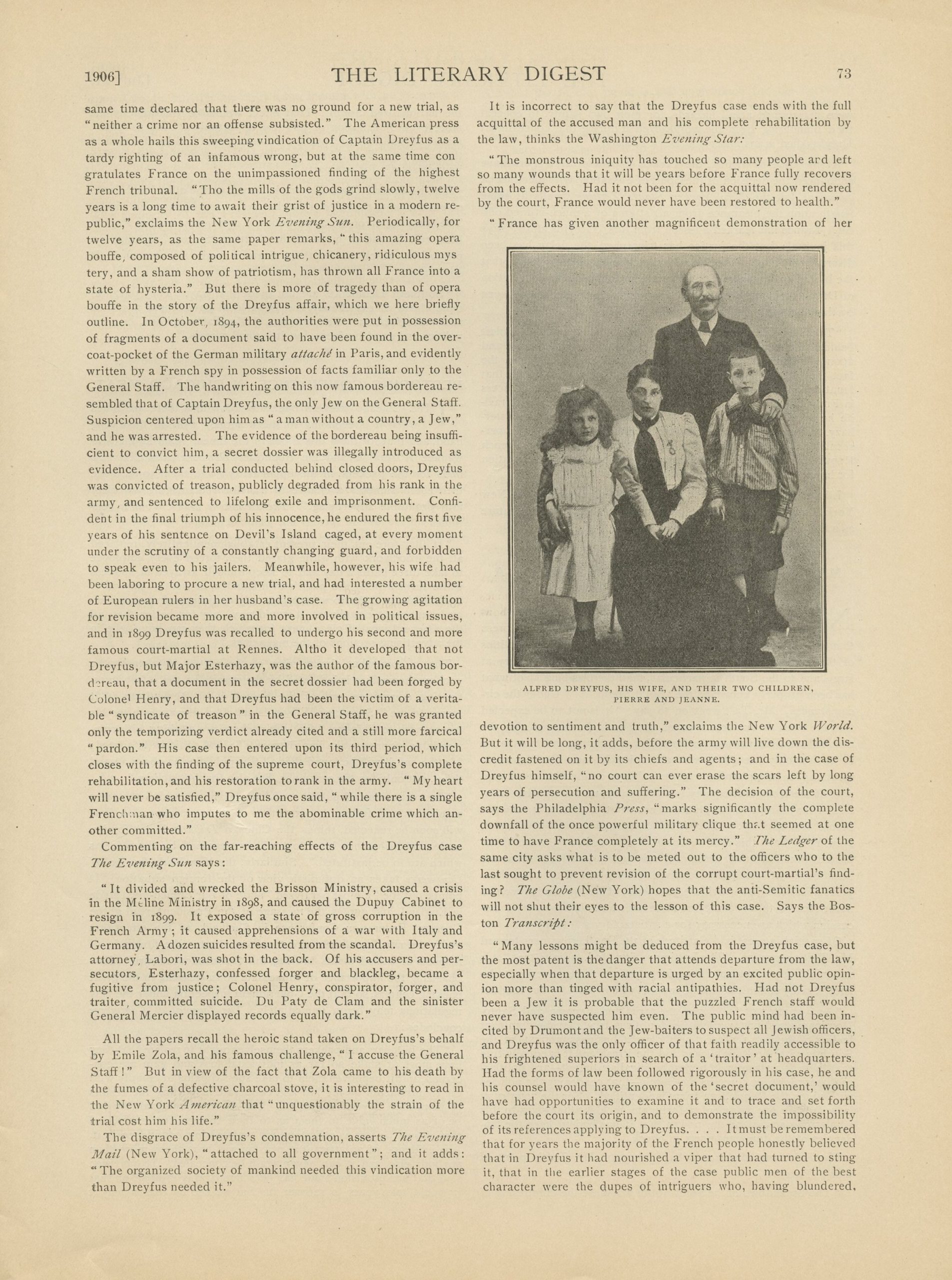
An accompanying image depicts Dreyfus with his wife and children. The article recalls a statement he made early in the affair:
“My heart will never be satisfied,” Dreyfus once said, “while there is a single Frenchman who imputes to me the abominable crime which another committed.”
The article concludes by addressing the wider lessons France—and the world—must draw from the Dreyfus Affair: the dangers of antisemitism, the perils of an unaccountable military establishment, and the indispensable role of a free press in the pursuit of justice.
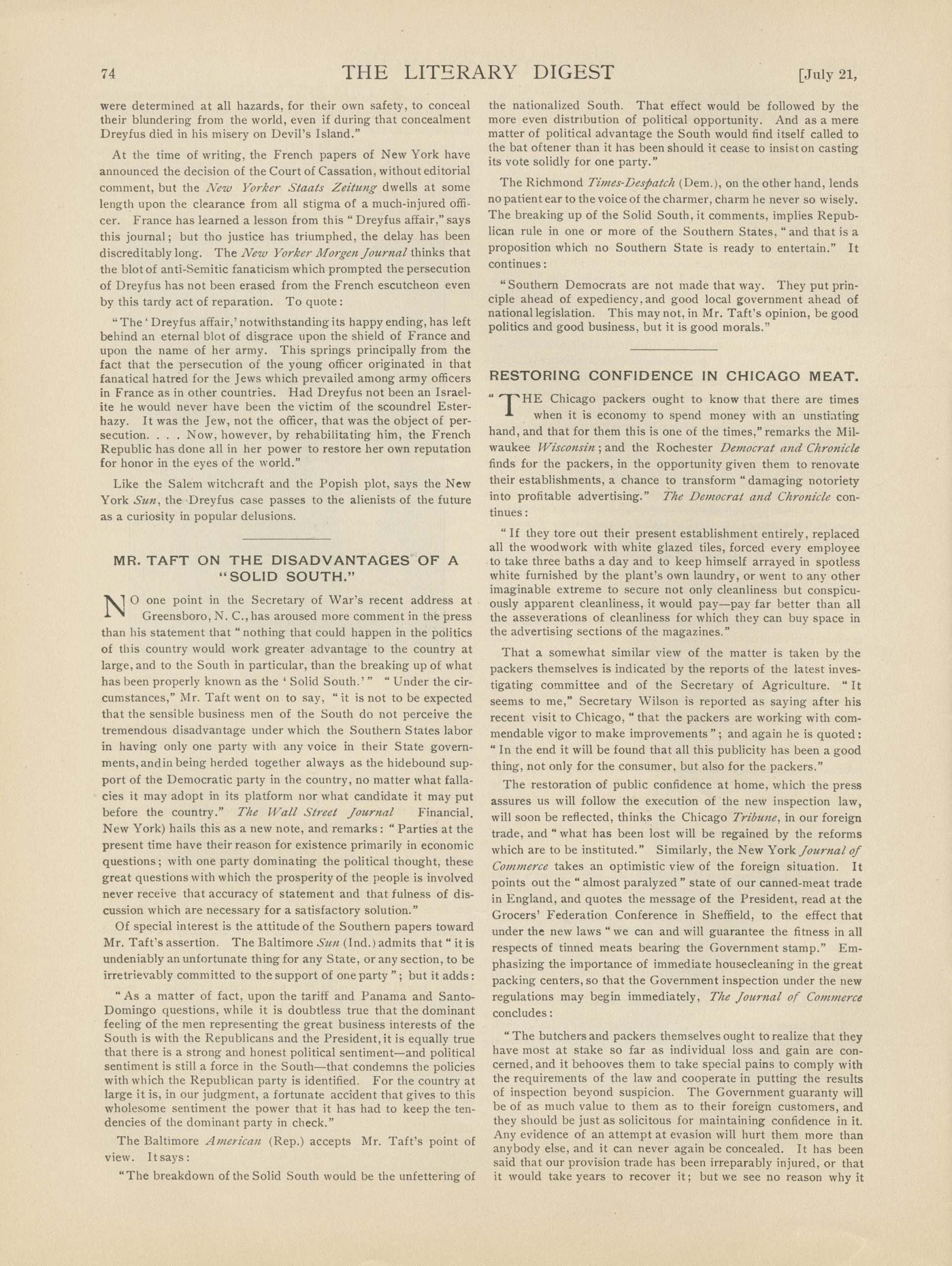
The author’s final assessment is unflinching. The Dreyfus Affair, despite its just conclusion, left behind an indelible stain upon the honor of France and its army. This stain, the article argues, arose primarily from the fanatical hatred of Jews that prevailed among sections of the French officer corps, as it did in other countries of the time. Had Dreyfus not been Jewish, he would never have fallen victim to the treachery of Esterhazy. It was the Jew, not the officer, who was the true target of persecution. Yet through Dreyfus’s rehabilitation, the French Republic ultimately did all within its power to restore its standing in the eyes of the world.
About The Literary Digest
The Literary Digest was an American weekly magazine published from 1890 to 1938. It gained renown for its comprehensive surveys of American and international journalism and for presenting a wide range of perspectives on politics, science, religion, culture, literature, and social issues.
Issue details:
Pages 69–98 (complete issue). Very good condition.

Sorry, the comment form is closed at this time.