

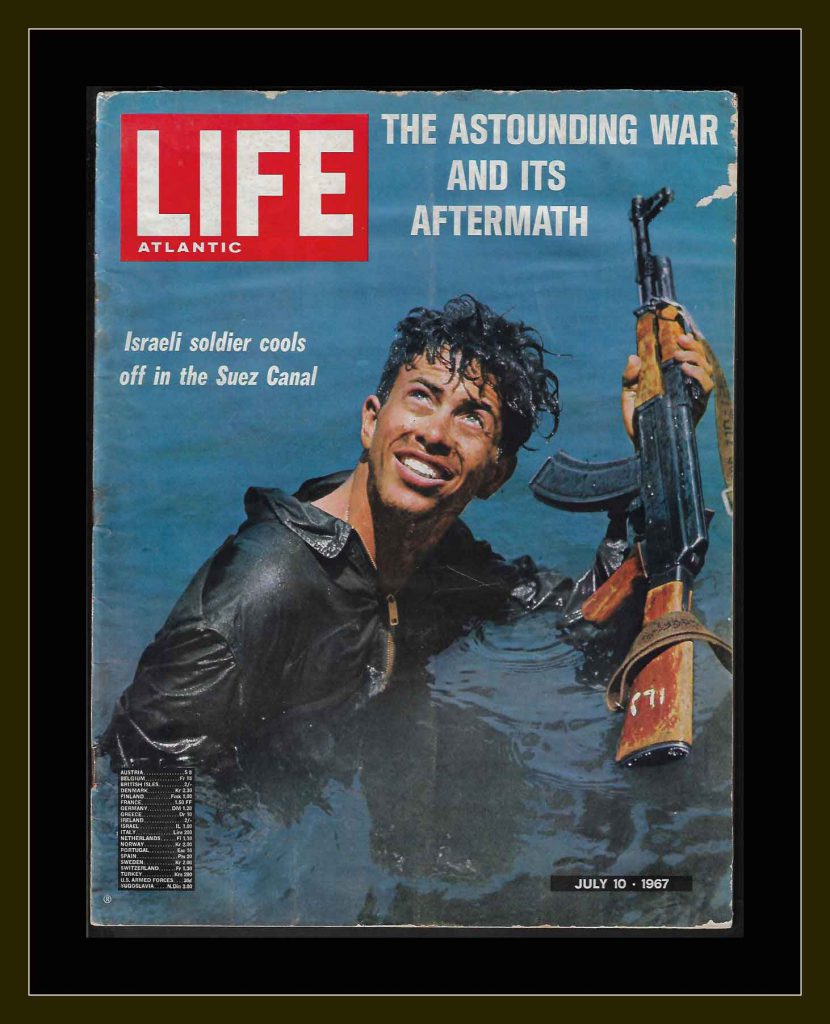
05 Jun 59 Years Since Israel’s Six-Day War Victory
The Six-Day War, fought between June 5 and June 10, 1967, was one of the most significant events in the history of the State of Israel and the modern Middle East. In just six days, Israel defeated the armies of Egypt, Jordan, and Syria, removed an immediate military threat to its existence, reunited Jerusalem, and liberated territories deeply connected to Jewish history and identity.
More than half a century later, the war remains a defining moment in Israel’s national story and continues to shape the political landscape of the region.
The Road to War
The years preceding the war were marked by increasing tensions between Israel and its Arab neighbors. Israel faced repeated terrorist attacks, border infiltrations, and acts of sabotage carried out by Arab militants and organizations such as Fatah, which had launched its armed campaign against Israel in 1965. At the same time, clashes along Israel’s northern border intensified as Syria supported attacks against Israeli communities and sought to divert water sources vital to Israel. The crisis reached its peak in May 1967. Egyptian President Gamal Abdel Nasser moved tens of thousands of troops into the Sinai Peninsula, expelled the United Nations Emergency Force that had been stationed there since 1957, and entered into military alliances with Jordan and other Arab states. To many Israelis, the developments appeared to be the final stages of preparations for a coordinated war against the Jewish state.
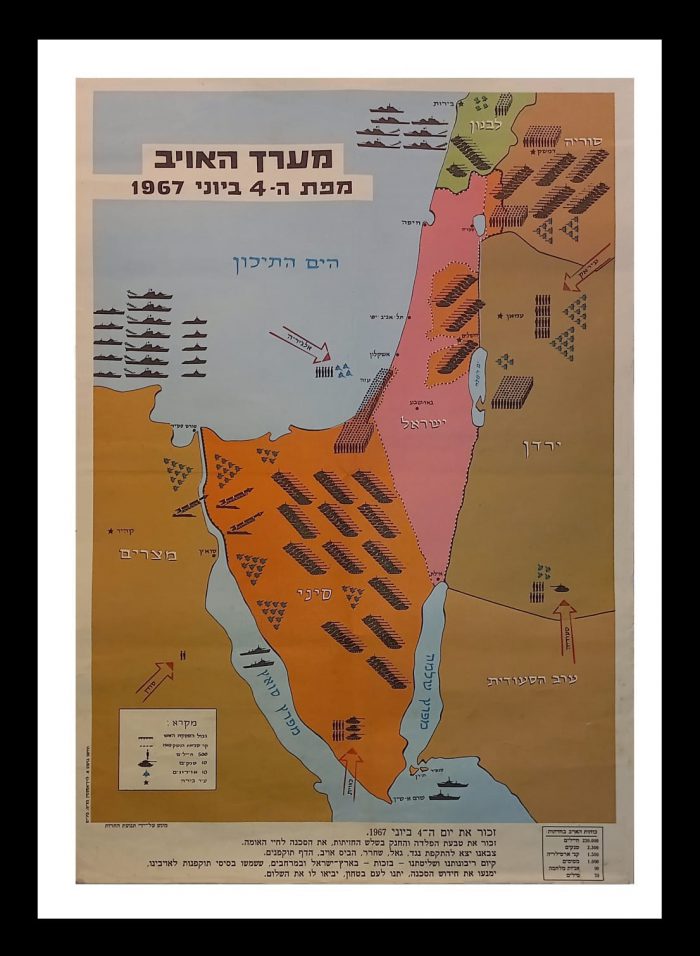
Arab Military Strength Opposing Israel Before the Six-Day War
The Straits of Tiran: Israel’s Economic Lifeline Under Siege
The most dramatic step taken by Egypt was the closure of the Straits of Tiran on May 22, 1967.
The Straits of Tiran form the narrow maritime passage connecting the Gulf of Eilat to the Red Sea. Every ship entering or leaving Israel’s southern port of Eilat had to pass through this waterway. For Israel in the 1960s, Eilat was far more than a regional port. It was the country’s gateway to Asia, East Africa, and the Far East. Through it passed vital imports, industrial supplies, strategic materials, and a substantial portion of Israel’s oil supply.
By closing the straits to Israeli shipping and to vessels carrying strategic cargo to Israel, Egypt effectively imposed a naval blockade on the country.
From Israel’s perspective, this was not merely a diplomatic dispute but an existential threat. Israel was a small nation with limited natural resources, surrounded by hostile states and heavily dependent on international trade and imported energy. The closure threatened to strangle one of Israel’s most important economic and strategic arteries. The blockade became even more alarming when viewed alongside Egypt’s military buildup in Sinai, the mobilization of Arab armies, and public declarations by Arab leaders calling for Israel’s destruction.Israel had previously declared, following the 1956 Sinai Campaign, that any future closure of the Straits of Tiran would be considered an act of war. As diplomatic efforts failed to reopen the waterway, Israeli leaders concluded that military action might soon become unavoidable.
Why Israel Struck First
For nearly three weeks Israel waited while international diplomatic efforts attempted to resolve the crisis.
No solution emerged.
Egypt maintained the blockade, Arab armies continued to mobilize, and the threat surrounding Israel grew more severe. On the morning of June 5, 1967, Israel launched a preemptive strike known as Operation Focus. Israeli aircraft attacked Egyptian air bases and destroyed most of Egypt’s air force on the ground within hours. Similar strikes later crippled the air forces of Jordan, Syria, and Iraq. The operation gave Israel overwhelming air superiority and fundamentally shaped the outcome of the war.
The Jordanian Front and the Battle for Jerusalem
Despite Israeli messages urging Jordan to remain out of the conflict, Jordanian forces began shelling Jerusalem and other Israeli population centers. Israel responded by opening a military campaign in Jerusalem and Judea & Samaria. The central role in the battle was assigned to the Israeli Paratroopers Brigade under the command of Mordechai Gur.
Ammunition Hill
One of the most famous battles of the war took place at Ammunition Hill in northern Jerusalem. The Jordanian position was heavily fortified with trenches, bunkers, machine-gun nests, and defensive obstacles. Israeli paratroopers attacked during the night of June 5–6 in fierce close-quarter combat. Fighting often took place face-to-face inside the trenches and bunkers. The battle was costly, but the Israeli victory opened the route toward northern Jerusalem and allowed Israeli forces to continue their advance toward the Old City. Today, Ammunition Hill remains one of Israel’s most important memorial sites and a symbol of sacrifice and courage.
The Liberation of the Old City
Following the capture of Ammunition Hill, Israeli forces secured key strategic positions including Mount Scopus and the French Hill area. On the morning of June 7, Israeli paratroopers received orders to enter Jerusalem’s Old City through the Lions’ Gate. Advancing through the ancient streets, they reached the Temple Mount and the Western Wall. At approximately 10:08 a.m., Brigade Commander Mordechai Gur transmitted the words that became immortal in Israeli history:
“The Temple Mount is in our hands.”
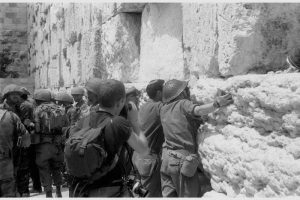
Moments later, Israeli soldiers stood before the Western Wall for the first time since 1948. For Jews throughout Israel and around the world, this was an emotional and historic moment. During the nineteen years of Jordanian rule over eastern Jerusalem, Jews had been denied access to the Western Wall and other holy sites. The reunification of Jerusalem was therefore viewed not only as a military achievement but also as the restoration of a profound historical and spiritual connection.
The Liberation of Judea and Samaria
During the war, Israel liberated Judea and Samaria, territories that had been under Jordanian control since 1948. For many Israelis, these regions represented the heartland of Jewish civilization and biblical history. Places such as Hebron, Bethlehem, Shiloh, Beit El, and the Jordan Valley occupy a central place in Jewish historical memory. The war restored Jewish access to many of these sites for the first time in nearly two decades.
The liberation of Judea and Samaria remains one of the most significant and debated outcomes of the war, but within the Zionist perspective it is viewed as the return of ancestral Jewish lands to Jewish sovereignty after centuries of foreign rule.
The Sinai Campaign
While fighting continued in Jerusalem, Israeli armored and infantry forces launched a rapid offensive across the Sinai Peninsula. Egyptian defensive lines collapsed under coordinated Israeli attacks, and within days Israeli forces reached the eastern bank of the Suez Canal. The Egyptian army suffered severe losses in equipment, aircraft, and personnel.
The Golan Heights
For years before 1967, Israeli communities in the Galilee had endured shelling from Syrian positions on the Golan Heights. On June 9, Israel launched an assault against the heavily fortified Syrian defenses.After difficult fighting, Israeli forces captured the Golan Heights, removing a major threat to northern Israel and dramatically improving the country’s strategic position.
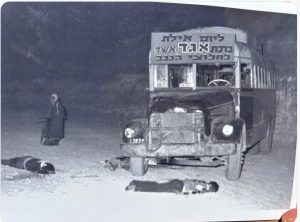
The Ma'ale Akrabim Massacre 1954
Terrorism Against Israel Before 1967
A common claim is that Palestinian terrorism emerged as a response to Israel’s control of territories captured during the Six-Day War. The historical record tells a different story. Violence against Jewish communities in the Land of Israel long predated 1967. During the British Mandate, Jewish civilians were attacked in events such as the 1929 riots and the Arab Revolt of 1936–1939. After Israel’s independence in 1948, numerous terrorist attacks and infiltrations were carried out by fedayeen groups operating from Egypt, Jordan, and other neighboring countries. Fatah began its armed campaign against Israel in 1965, two years before the liberation of Judea and Samaria and Gaza. By the outbreak of the Six-Day War, attacks against Israeli civilians and military targets were already taking place. From this perspective, the argument that anti-Israel terrorism began because of Israel’s presence in territories captured in 1967 is not supported by the historical timeline. Organized violence against Jews and against the State of Israel existed long before the Six-Day War, when Judea and Samaria were under Jordanian rule and Gaza was under Egyptian administration.
Conclusion
The Six-Day War was a turning point in modern Jewish and Middle Eastern history. It emerged from a period of escalating threats, military mobilization, and the blockade of Israel’s maritime lifeline through the Straits of Tiran. Within six days, Israel transformed a position of strategic vulnerability into one of military strength. The war led to the reunification of Jerusalem, the liberation of Judea and Samaria, the capture of the Sinai Peninsula and the Golan Heights, and the restoration of Jewish access to some of the most sacred sites in Jewish history. For many Israelis and supporters of Zionism around the world, the Six-Day War was not only a military victory but also a moment of national renewal, reconnecting the Jewish people with Jerusalem and the historic heartland of their ancient homeland.
-
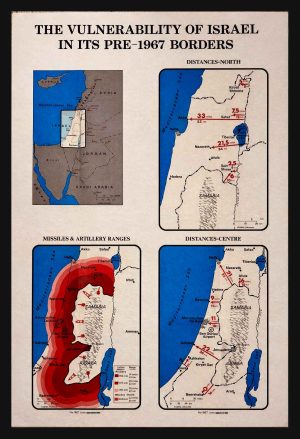
“The Vulnerability of Israel Before 1967 – Rare Official Israeli Explanatory Vintage Map Poster”
$2,400.00 Buy Now -
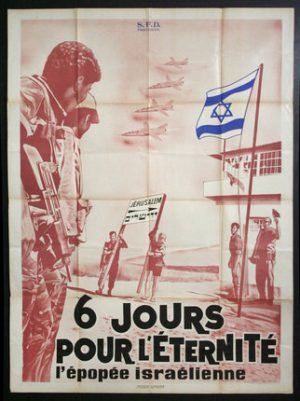
1967 Six Days To Eternity / Six Days Forever movie poster famous Israeli war! 1967 Paratroopers
$3,200.00 Buy Now -
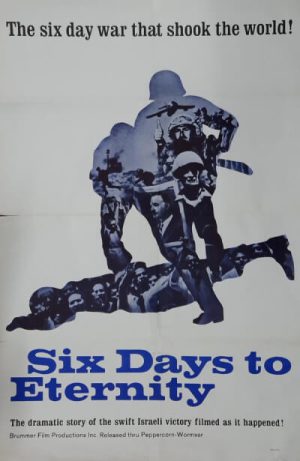
1967 SIX DAYS TO ETERNITY movie poster famous Israeli war
$1,400.00 Buy Now -
1967 Vintage Israeli map – Original Six days war Map The Enemy Forces Against Israel
$950.00 -
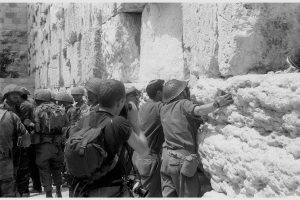
Iconic Photography Six Day War Israeli soldiers at Western wall Jerusalem, 1967
$1,600.00 Buy Now -

LIFE Magazine 1967 June 23 Israeli War Sinai Battle Six Days War Israel
$850.00 Buy Now -
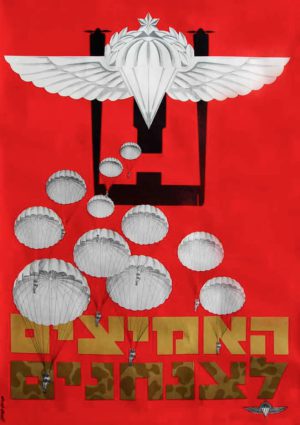
Rare 1967 The Brave One’s to the Israeli Paratroopers, Recruitment Vintage Poster, Israel IDF
$7,800.00 Buy Now -

rare Srulik, the cartoon character symbolizing Israel, expressing his patriotism after the Six-Days War, 1967
$3,500.00 Buy Now

Sorry, the comment form is closed at this time.