

01 Nov A Rare and Breathtaking Piece of History: How the IDF Reached Out to the Children of the Ma’abarot on the First Independence Day!
The year is 1949. Following the War of Independence, hundreds of thousands of new immigrants arrived in Israel and were initially housed in immigrant camps. When these facilities reached full capacity, the government established the “Ma’abarot” (transit camps) in 1950—makeshift settlements consisting of tents and tin shacks. Living conditions were extremely harsh, characterized by severe overcrowding and poor infrastructure. Unlike the earlier camps where the state provided full assistance, Ma’abarot residents were required to join the workforce and support themselves independently. By the mid-1950s, the state gradually began dismantling the Ma’abarot, relocating the immigrants to permanent housing in established cities and newly built development towns.
How the IDF Embraced the Children of the Ma’abarot (Transit Camps) from the Tents!
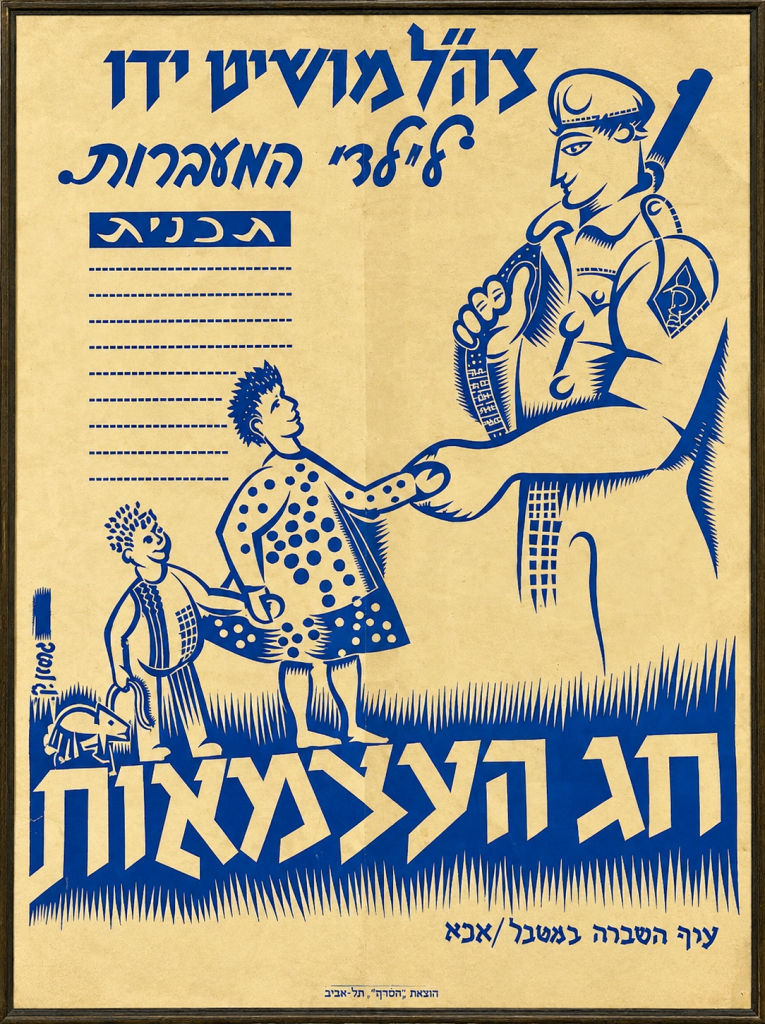
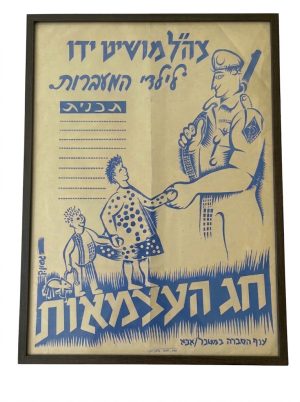
This historical poster, “The IDF Reaches Out to the Children of the Ma’abarot,” is much more than a rare collectible – it is a fascinating window into the most turbulent, challenging, and moving period in the history of the State of Israel. Immediately following the War of Independence, the young and scarred country found itself facing a massive and unprecedented wave of immigration. Holocaust survivors rising from the ashes of Europe, alongside Jews uprooted from Arab and Islamic countries, arrived in masses. The scale was unimaginable: while the population did not triple in a single year, it doubled within just about three years – a demographic phenomenon unparalleled in modern history, which placed an immense burden on the meager resources of the newborn state.
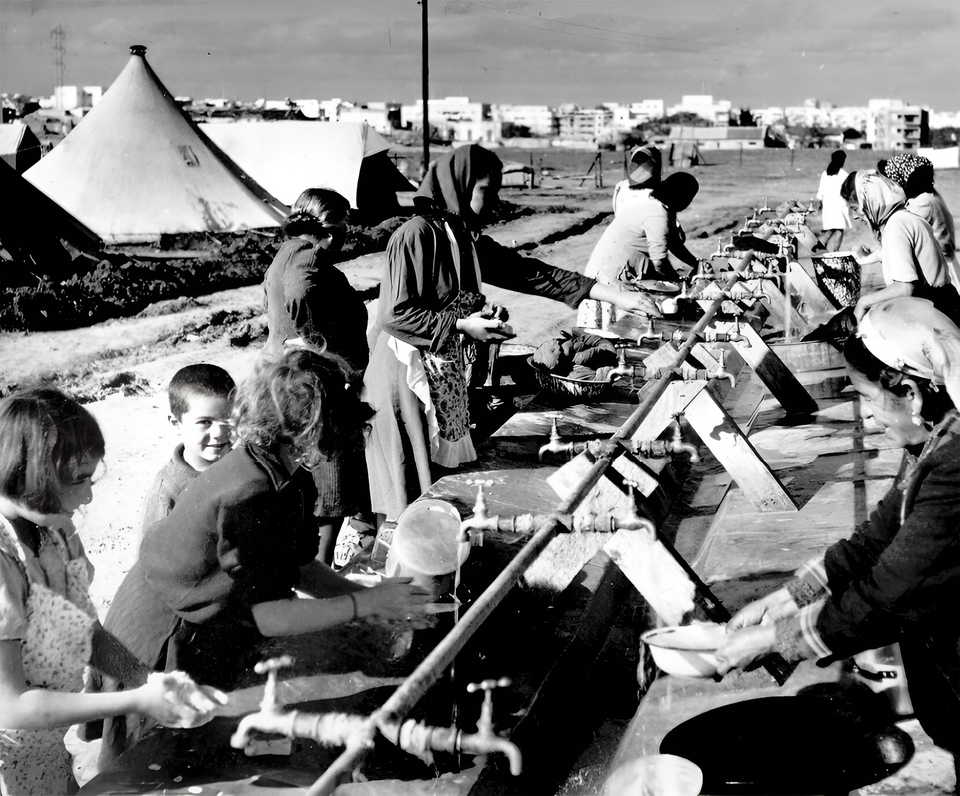
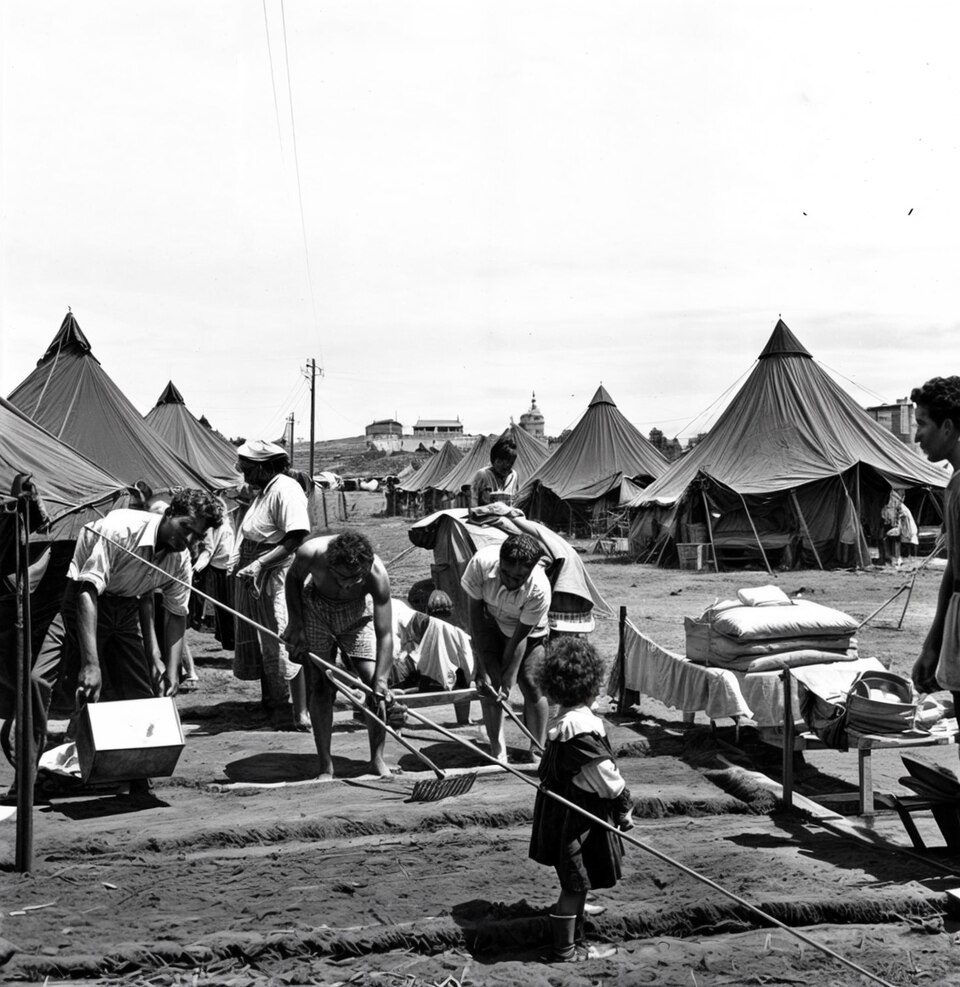
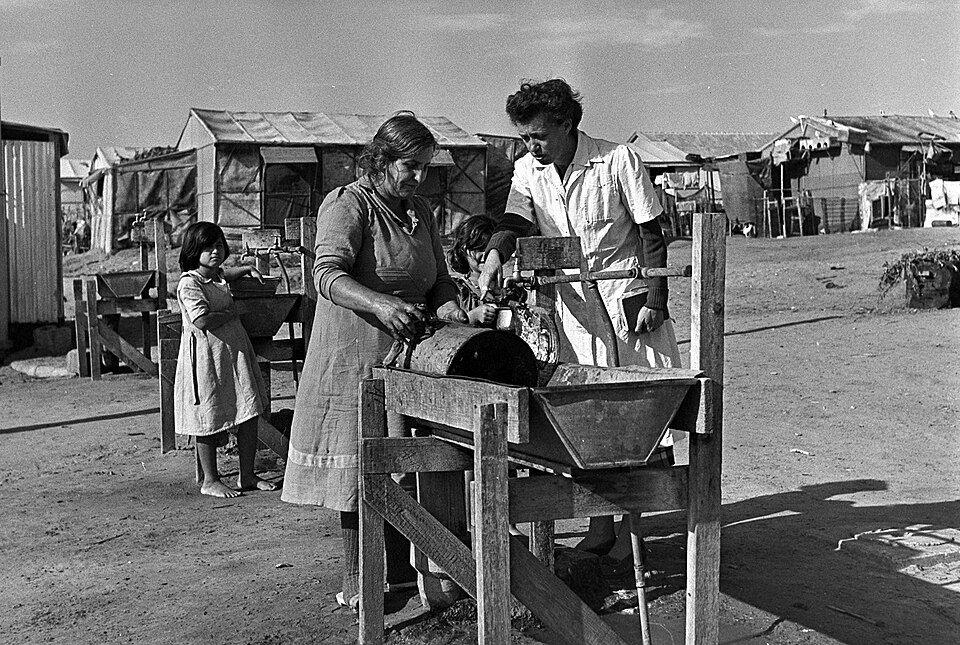
The most immediate and severe crisis was housing. With no infrastructure, resources, or permanent structures available to absorb the masses, hundreds of thousands of new immigrants were housed in Ma’abarot (transit camps) – cities of tents, tin shacks, and canvas huts that sprang up all over the country. The conditions were unbearable: freezing and flooded winters (like the harsh winter of 1950), scorching summers, severe food shortages, disease, and dilapidated sanitary infrastructure.
Out of this chaos and distress, the Israel Defense Forces, having just finished fighting for the very existence of the state, was mobilized for a supreme national-civic mission: the rescue and absorption of the immigrants. Soldiers and commanders were sent to the Ma’abarot in special operations to physically assist, distribute clothing, tents, and blankets, and provide medical care. Beyond material help, IDF bases became educational and cultural melting pots. Teachers in uniform taught the new immigrants Hebrew, gave civics lessons, and tried to bridge the cultural and language gaps of this immense ingathering of exiles, while building a shared Israeli identity.
The poster before us, printed ahead of the Independence Day events in the early years of the state, captures the essence of the Israeli spirit of that era. The first Independence Day and the holidays that immediately followed were celebrated in the shadow of poverty, the austerity program, and daily hardships, but also with a profound sense of wonder, victory, and tremendous solidarity. The simple and touching illustration of the armed soldier extending a warm and reassuring hand to the children of the Ma’abara illustrates the deep mutual responsibility that characterized the community. This poster stands as a living, moving testimony that despite all the problems, mistakes, shortages, and immense difficulties of the beginning, the state and the army made a supreme effort to offer an embracing hand to the future generation growing up in the tents of the Ma’abarot.
Sorry, the comment form is closed at this time.